
Home > Silicosis
Silicosis
Besides Radiogenic Cancers, Part B of the EEOICPA also covers beryllium sensitivity, chronic beryllium disease (CBD), and chronic silicosis. Coverage of these conditions is extended to atomic weapons employees, beryllium vendor employees, federal employees, and DOE contractor/subcontractors. The Nevada Test Site is one of two locations for the EEOICPA in the United States to which claimants are eligible for the $150,000 on the Part B side. Chronic silicosis is a non-malignant disease of the lung caused by prolonged exposure to silica dust. Under Part B, if all covered employment and exposure criteria are met, only chronic silicosis is covered. However, under Part E, if all covered employment and exposure criteria are met, chronic silicosis, acute silicosis, accelerated silicosis, and complicated silicosis are covered. If chronic silicosis, acute silicosis, accelerated silicosis, or complicated silicosis is claimed on the Form EE-1 or EE-2, then the CE develops for that specific silicosis under the appropriate Part(s) of the Act.
a. Silicosis Employment and Exposure Criteria, Part B. 42 U.S.C. §7384r(c) and (d) describe the employment requirements for an employee diagnosed with chronic silicosis. The CE reviews the evidence to ensure that the employee was: (1) A DOE employee or a DOE contractor employee; and (2) Present for an aggregate of at least 250 workdays during the mining of tunnels at a DOE facility located in Nevada or Alaska for tests or experiments related to an atomic weapon (Part B claims only). Since the October 1992 unilateral moratorium on nuclear weapons testing went into effect, a stockpile stewardship program that involves the mining of tunnels related to noncritical atomic weapons testing and experiments has continued through the present day at the Nevada Test Site.
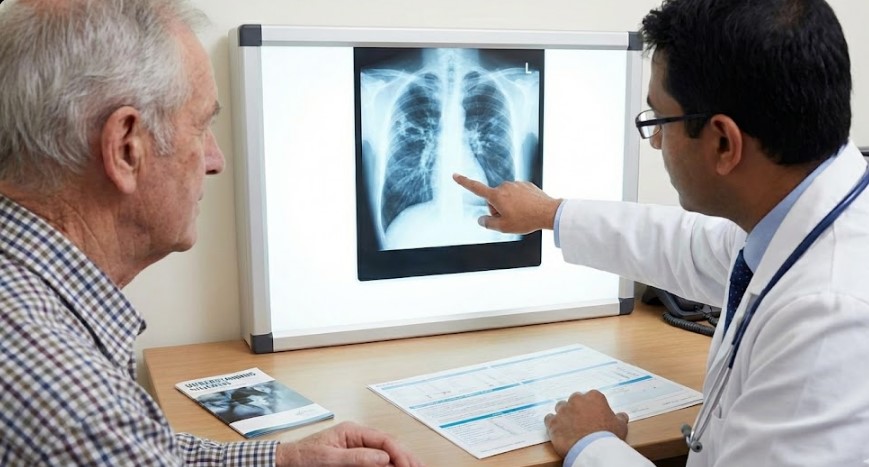
b. Medical Evidence. 42 U.S.C. §7384r(e) describes the medical evidence needed to establish a diagnosis of chronic silicosis. The CE verifies that all the necessary medical evidence is present in accordance with the requirements listed in the statute, as follows: (1) The initial occupational exposure to silica dust preceded the onset of chronic silicosis by at least 10 years; and (2) A written medical narrative from a qualified physician that includes a diagnosis of chronic silicosis and the date of initial onset. In addition, one of the following is required: (a) A chest radiograph, interpreted by a physician certified by the NIOSH as a B-reader (physician’s signature not required), classifying the existence of pneumoconiosis of category 1/0 or higher; (b) Results from a computer assisted tomograph or other imaging technique that are consistent with chronic silicosis; or (c) Lung biopsy findings consistent with chronic silicosis. Upon review of the evidence submitted, the CE verifies the presence of the necessary medical and diagnostic evidence to support a diagnosis of chronic silicosis. If deficiencies are noted, the CE requests evidence from the claimant and/or the treating physician.

c. Silicosis Employment and Exposure Criteria, Part E. The provisions regarding separate treatment for chronic silicosis set forth in §7384r of the Act for Part B do not apply to Part E. Unless a Part E contractor or subcontractor qualifies for coverage because of the acceptance of a Part B claim for chronic silicosis, the CE proceeds to evaluate the claim based on routine adjudication steps for assessing a Part E claim. This will mean initially establishing that the employee is a qualified DOE contractor or subcontractor employee with potential exposure to silica. The CE’s finding of potential exposure is established with a careful examination of relevant case evidence including information communicated in the DAR records, DOE FWP records, SEM, employment records, OHQ, affidavits, and claimant written submissions. Once the potential exposure to silica is established, the CE may refer the case to an Industrial Hygienist (IH) to obtain a characterization of the level, extent, and frequency of silica exposure. The CE should be mindful to assess exposure for any applicable Part E presumptive causation standard that may exist including the one for chronic silicosis.
d. Medical Evidence, Part E. Silicosis is a nonmalignant respiratory disease which can be diagnosed with different characterizations including references to the nature of the disease as acute, accelerated, chronic and complicated. As with any other Part E illness, the medical evidence must contain a written medical diagnosis for silicosis including the date of its initial onset. A written diagnosis for silicosis should be based on a qualified physician’s interpretation of available clinical or diagnostic evidence. In the absence of a silicosis diagnosis, the CE is to undertake development to obtain such evidence from the claimant or their physician; or refer the matter to a CMC. To establish whether diagnosed silicosis is a covered illness under Part E, absent the acceptance of the claim for the illness under Part B, the CE must assess any presumptive causal standard that exists in program procedure or obtain a medical opinion from a qualified physician that documents that it is “at least as likely as not” that exposure to a toxic substance at a DOE facility was a significant factor in aggravating, contributing to, or causing the employee’s silicosis and it must be “at least as likely as not” that the exposure to such toxic substance was related to employment at a DOE facility. If no presumptive standard is found to apply to the claim situation, and medical evidence is needed, the CE is to permit the claimant the opportunity to obtain such evidence from a physician of their choosing before taking any action to refer the matter to a CMC. The CE must weigh any physician opinion received to determine if it is well-rationalized as defined in program procedure.